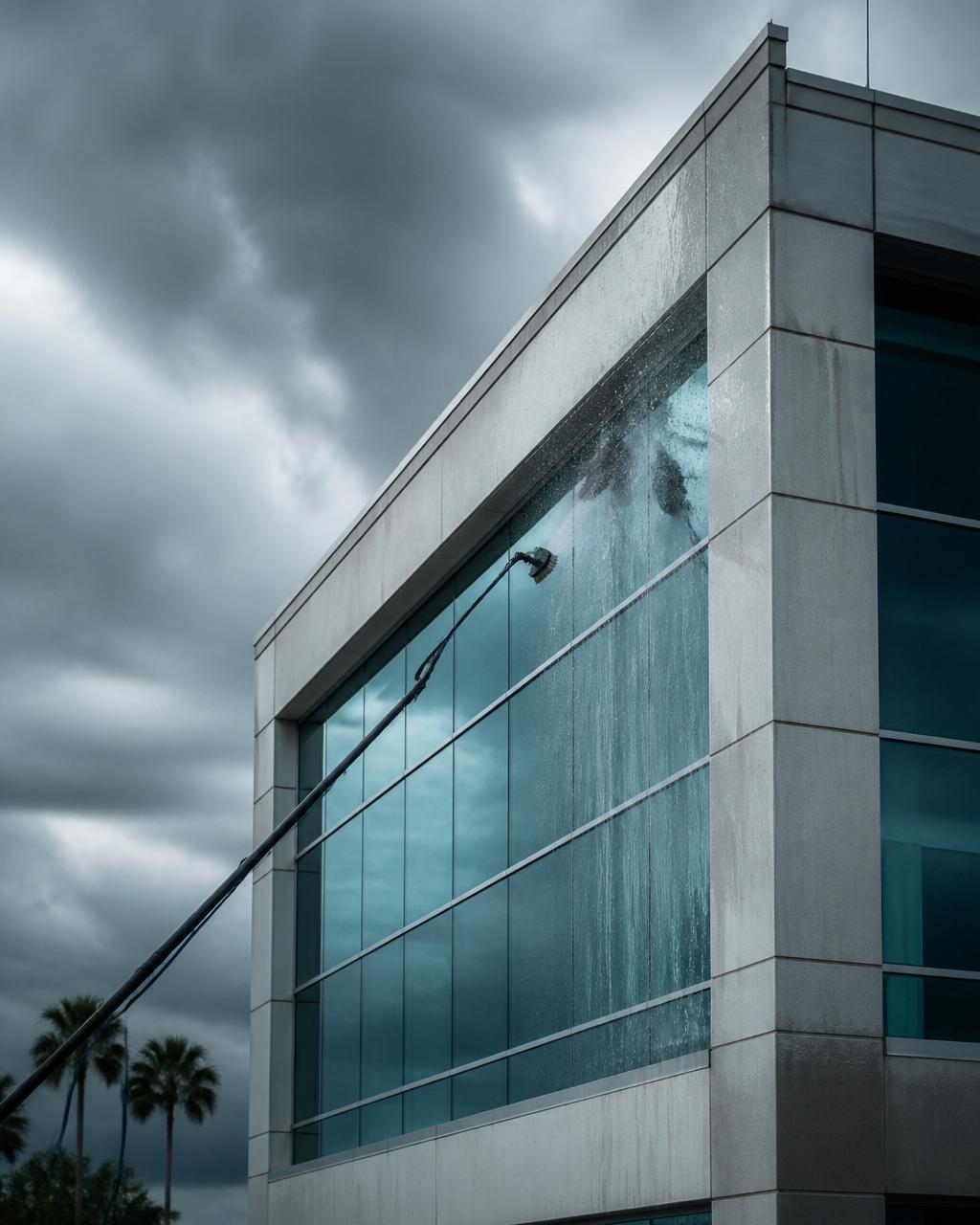
Elevated Exterior Care. Smarter Access. Less Disruption.
CLN combines advanced aerial access with surface-appropriate cleaning, organic remediation, elevated glass maintenance, and qualified protective treatments to maintain commercial building exteriors while reducing unnecessary disruption to property operations.
The right method for the asset. Not the other way around.
Protecting More of the Building. With Less Interference.
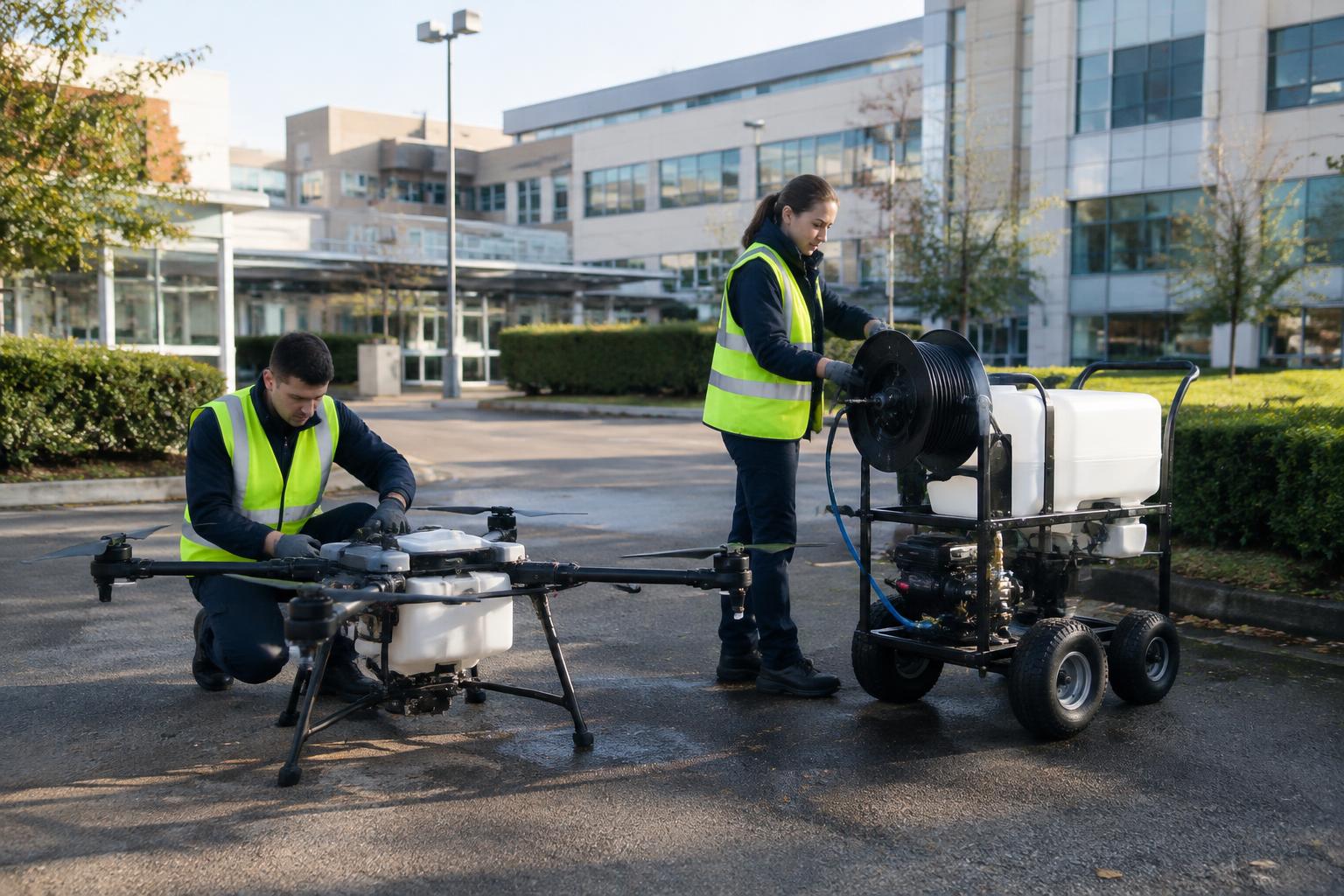
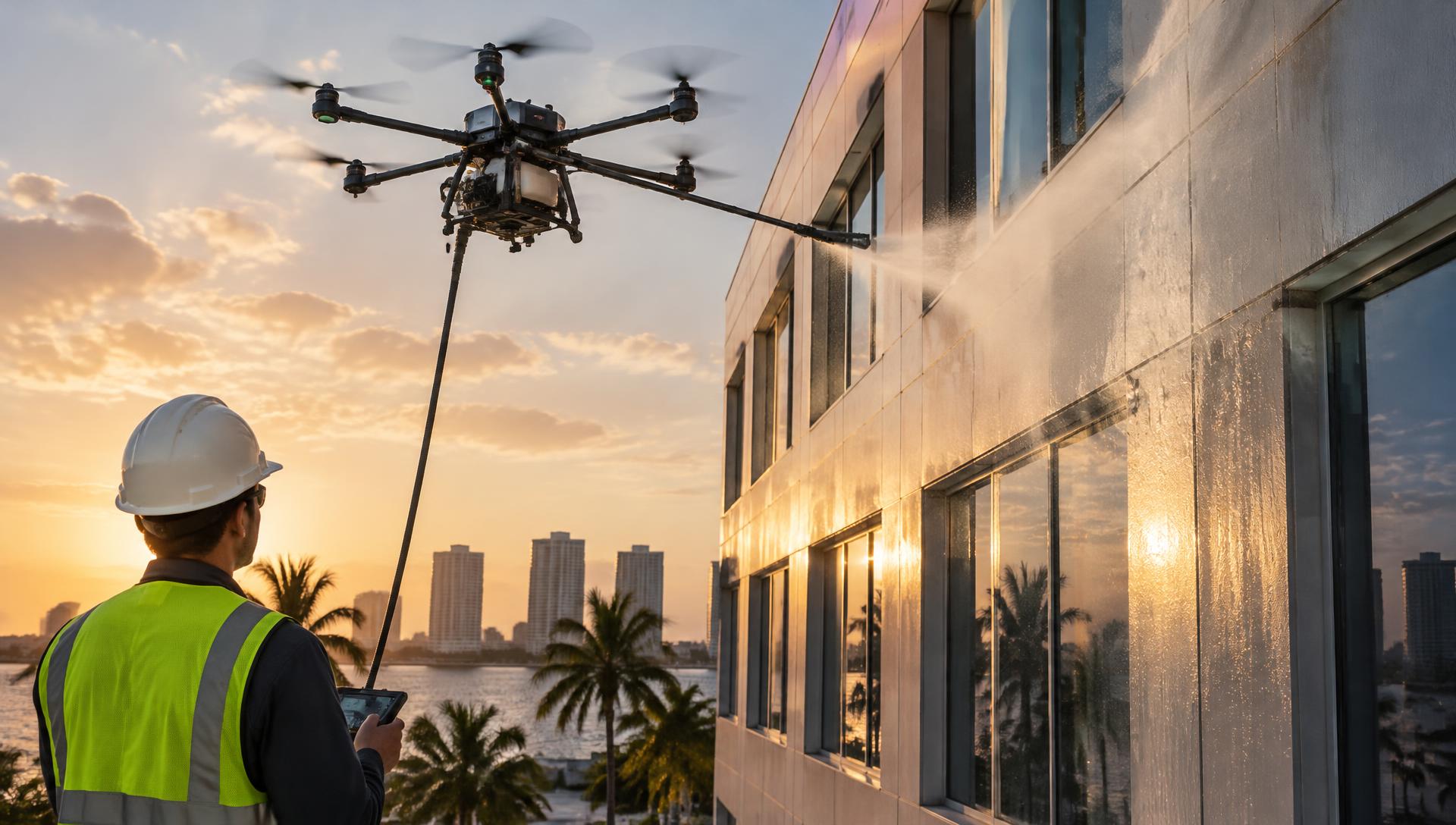
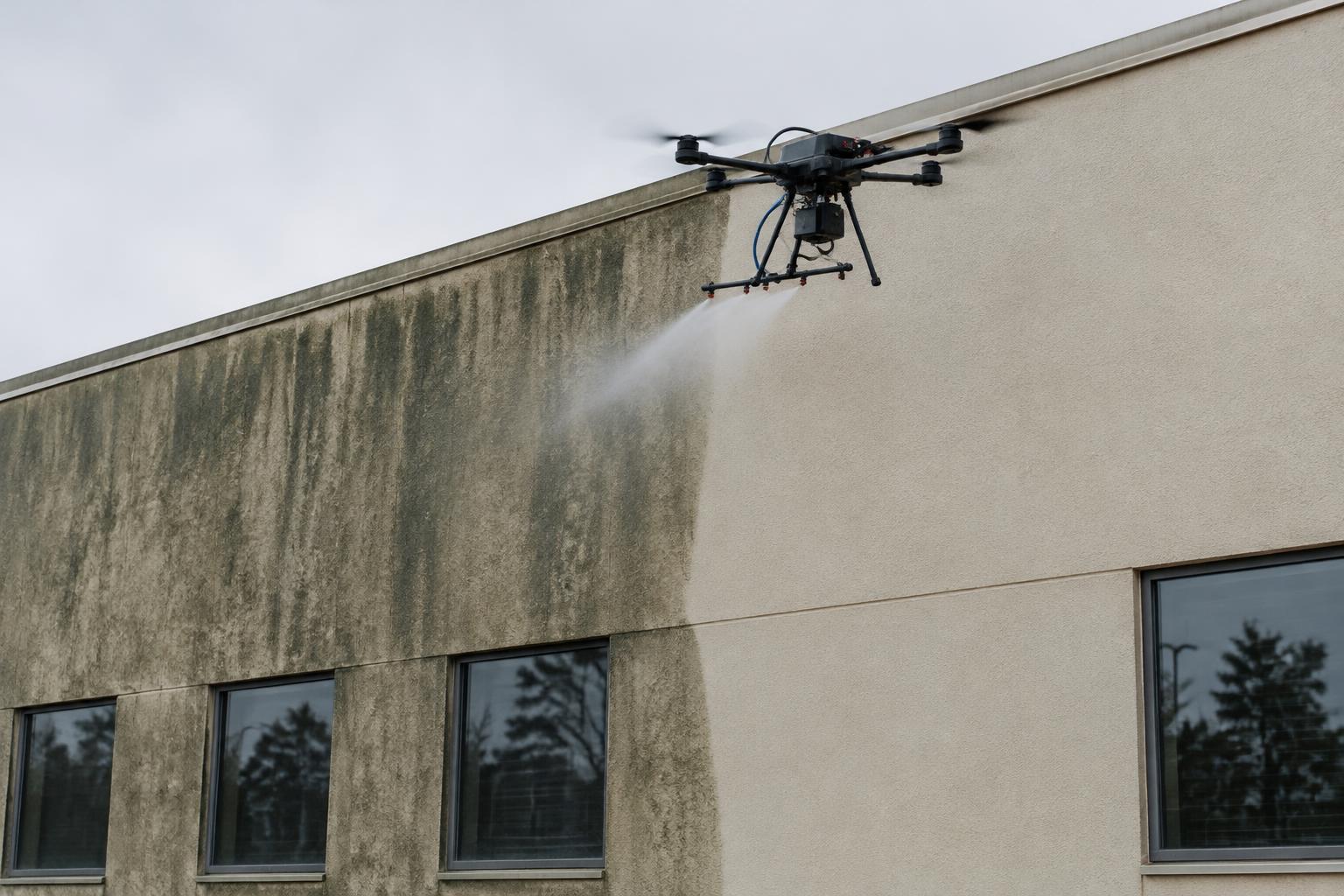
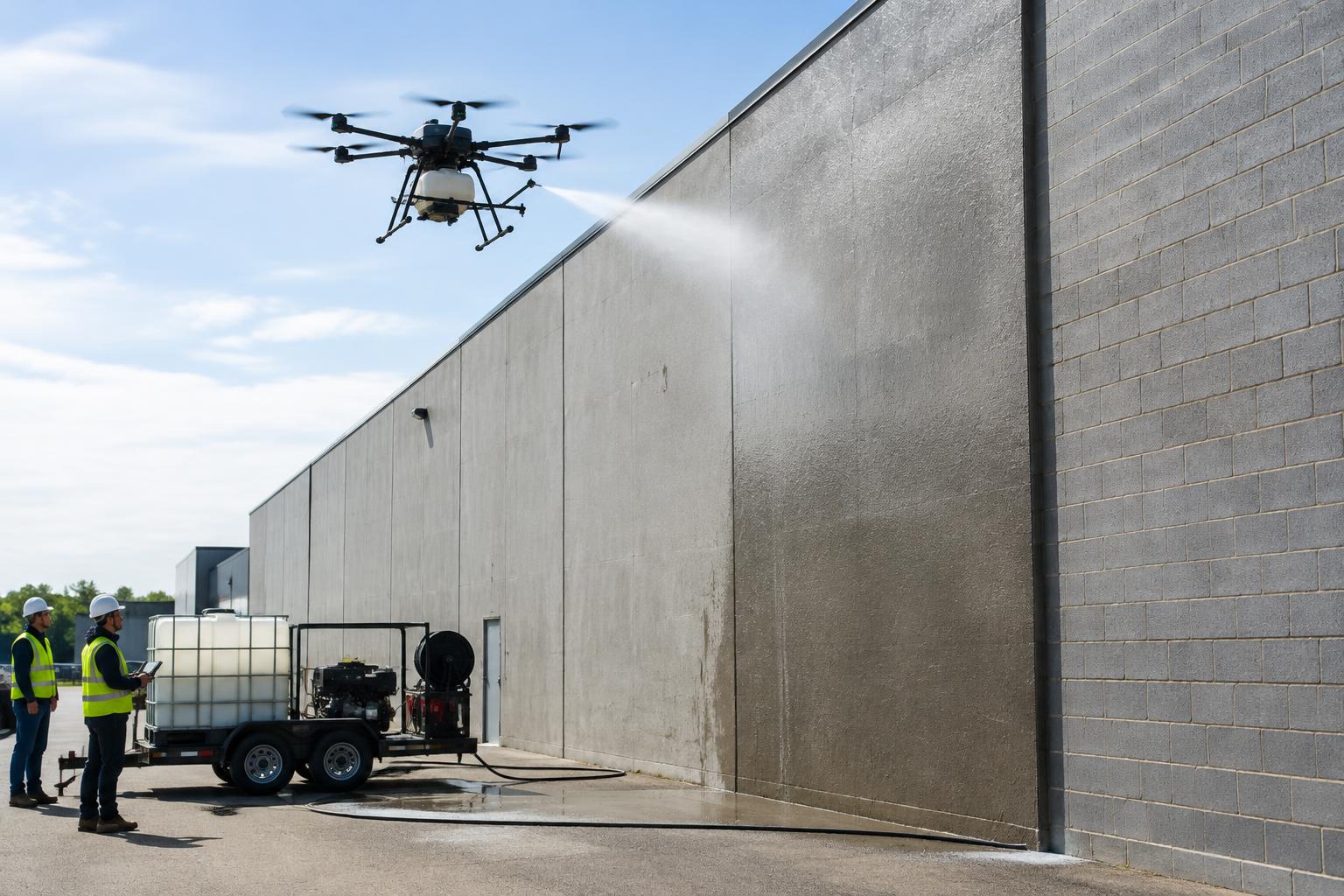
Elevated exterior maintenance has traditionally depended on lifts, scaffolding, rope-access systems, and extensive equipment positioning. For suitable buildings, aerial access offers an additional method for delivering cleaning and surface treatments while keeping more of the work coordinated from the ground.
Clean Stream evaluates the property, surface condition, cleaning requirements, and operational environment before determining the appropriate approach.
Our objective is not to deploy a drone on every project. Our objective is to deliver the right treatment, through the right access method, with the least practical disruption.
High pressure is not appropriate for every surface. The correct approach considers the contamination, substrate condition, existing coatings, sealants and manufacturer recommendations — so the facade is cleaned without compromising substrate integrity.
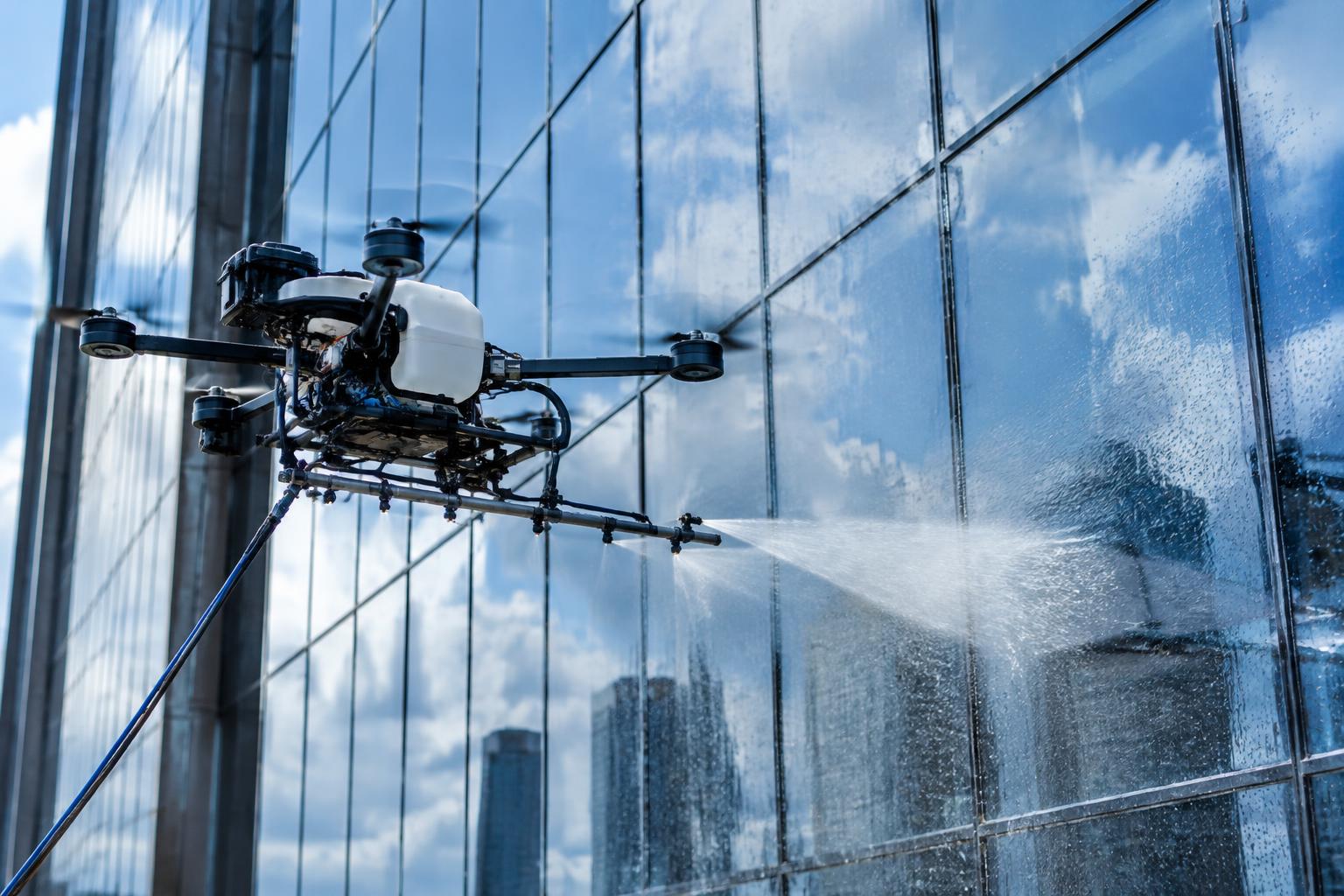
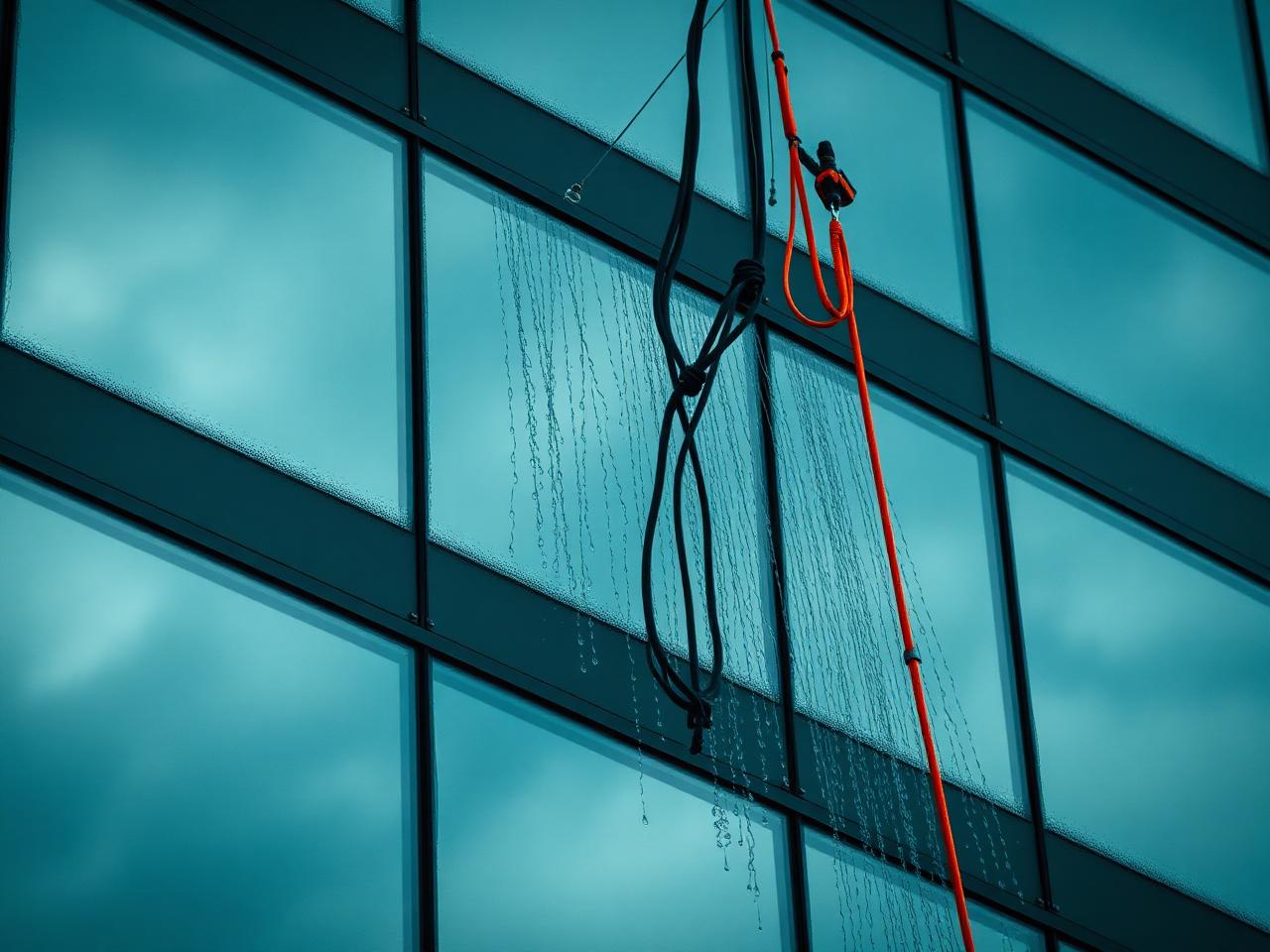
Aerial and water-fed methods extend CLN CrystalGuard™ glass care to elevations that would otherwise require lifts or rope access. Some glazing still requires hands-on detailing — frames, tracks, sills or heavily soiled glass — and CLN plans for that rather than forcing one method onto every pane.
Mid-rise commercial window washing
Elevated glazing
Curtain-wall maintenance
Purified-water rinsing
Recurring exterior glass service
Appropriate water-fed and aerial application methods
Removing visible staining is not the same as treating biological contamination. CLN selects chemistry and dwell time for the organism and the substrate, then rinses at pressures the surface can tolerate. Regrowth depends on moisture, shade and exposure, so treatment intervals are planned — not promised away.
Delivered through CLN AerialSeal™. Preparation, substrate condition, coating compatibility, application rate, curing requirements and manufacturer instructions determine feasibility. Aerial application does not replace repairs to failed joints, cracks or structural deficiencies, and specialized industrial coatings are project-dependent, subject to evaluation.
Compatible water-repellent application
Qualified masonry treatments
Concrete and porous-substrate protection
Elevated surface-treatment applications
Selected architectural protective coatings
Specialized industrial coatings — subject to evaluation
Less Access Equipment. Less Disruption. More Efficient Exterior Care.
01
Reduced Work at Height
Appropriate aerial applications reduce the need for technicians to occupy elevated access platforms during some portions of exterior maintenance.
02
Potentially Faster Mobilization
Reduced dependence on conventional access equipment can shorten setup and equipment-repositioning requirements.
03
Potential Cost Savings
On suitable projects, reduced access complexity can lower equipment, labor and mobilization expenses.
04
Operational Continuity
Less access equipment may reduce interference with property entrances, parking areas, loading zones and ongoing operations.
05
Access to Difficult Elevations
Aerial equipment can service selected elevated surfaces where conventional access is restrictive or expensive.
06
Exterior Asset Preservation
Surface-appropriate cleaning, remediation and protective treatments contribute to planned maintenance and exterior asset performance.
Results depend on the property. Not every project is cheaper, faster or better suited to aerial methods.
Illustrative Scenario — Actual Project Pricing and Savings Vary
The Economics of Intelligent Access.
Commercial exterior glass area: 49,920 sq. ft.
Traditional cleaning example · $0.50/sq. ft.$24,960
Drone-assisted cleaning example · $0.25/sq. ft.$12,480
Illustrative savings
$12,480
Difference
50%
These are hypothetical rates from an industry illustration — not CLN quotes or market averages. Property geometry, contamination, access constraints, site conditions, finishing requirements and equipment all influence pricing. Every CLN project is priced after assessment.
Client Delivery Workflow
Assessed. Planned. Executed. Documented.
01
Assess
Evaluate exterior surfaces, contamination, access conditions, working height, adjacent property operations and treatment suitability.
02
Plan
Determine chemistry, pressure, treatment method, required equipment, site controls, and whether aerial, ground-based or combined access is appropriate.
03
Execute
Perform the authorized cleaning or protective treatment using controlled methods and appropriate operational safeguards.
04
Document
Verify completed areas, photograph results, record relevant treatments and identify maintenance recommendations.
Customer Deliverables
A Defined Scope. A Documented Outcome.
Core — every project
Exterior condition observations
Project-specific service scope
Cleaning and treatment plan
Identified service areas
Completion review
Areas requiring additional maintenance or repair
Project-specific
Before-and-after photographs where appropriate
Product and application documentation where applicable
Recommended future treatment intervals
Optional recurring exterior maintenance program
Typical Property Applications
Built for Complex Commercial Properties.
Office & Mid-Rise
Campuses & Healthcare
Industrial & Warehouse
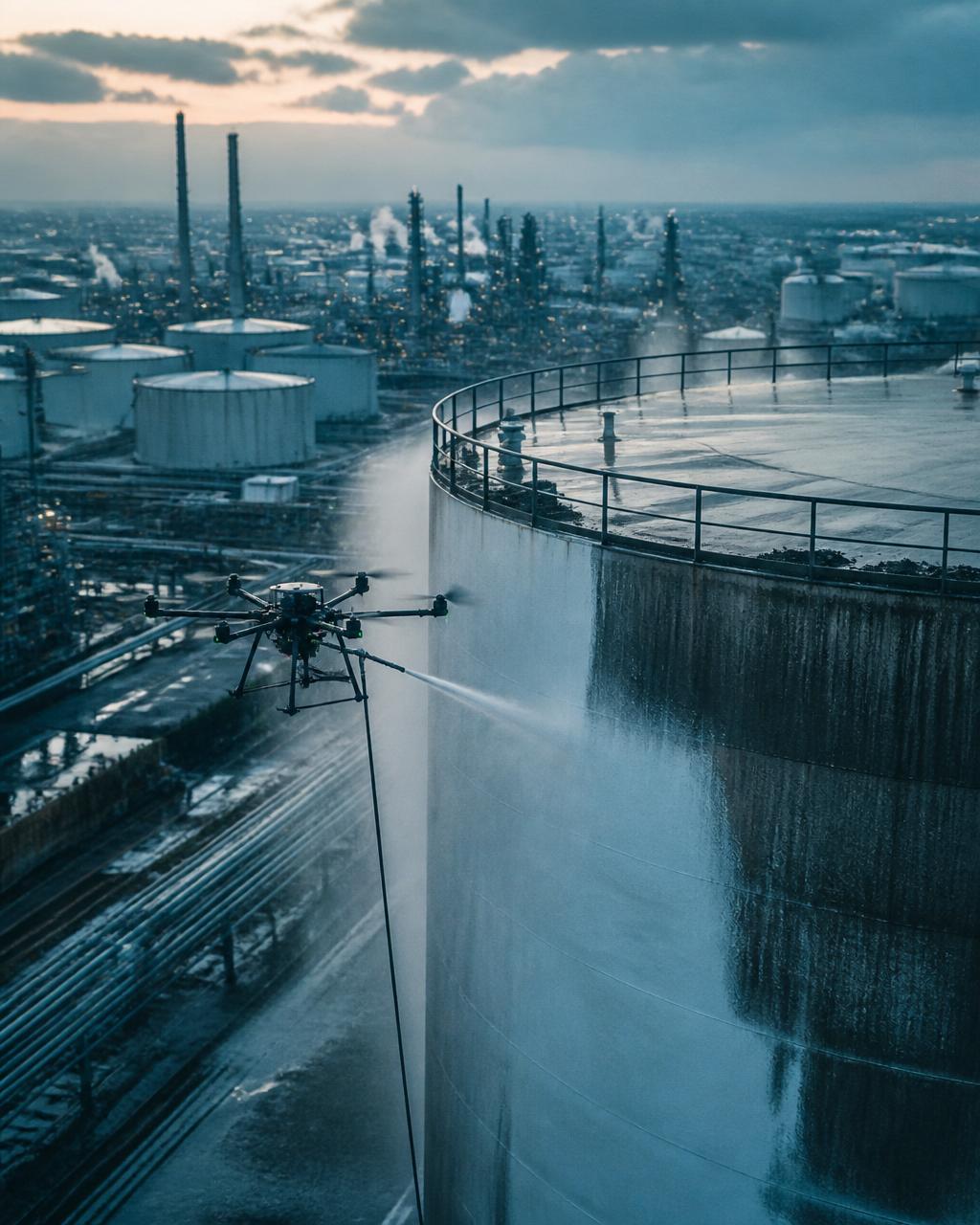
Infrastructure Assets
Retail & Hospitality
Commercial office buildings
Retail centers
Hospitality properties
Educational campuses
Hospitals & institutional facilities
Industrial warehouses
Manufacturing facilities
Mid-rise properties
Stadiums & entertainment venues
Commercial real estate portfolios
Select infrastructure assets
Method Comparison
The Right Access Method. The Right Outcome.
Conventional access and aerial methods each have advantages. Many projects use more than one.
Aerial Access
Can reduce lift and scaffold requirements on suitable projects, with flexibility for selected high-reach applications.
Ground-Based Access
Remains appropriate for detail cleaning, sensitive areas, close-contact work, finishing, certain repairs and constrained flight environments.
Specialty Access
Lifts, scaffolds and rope access remain necessary for certain tasks and conditions.
“CLN selects the method around the property, the substrate, and the intended result.”
FAQ
Questions Property Teams Ask.
What building surfaces can be cleaned using aerial equipment?
Suitable candidates include stucco, EIFS, painted and coated cladding, masonry, concrete, metal panels, glazing and selected roof surfaces. Suitability depends on the substrate, its condition, height, surrounding obstructions and the flight environment — confirmed during assessment.
Can drone systems clean multi-story commercial windows?
Yes, on suitable mid-rise glazing and curtain walls, typically using purified-water rinsing. Frames, tracks, sills and heavily soiled glass may still need hands-on or water-fed pole detailing, which CLN plans into the scope under CLN CrystalGuard™.
Is aerial cleaning faster than traditional access methods?
It can be on suitable projects, mainly because setup and equipment repositioning are reduced. Weather, wind, geometry, contamination level and finishing requirements all affect duration, so it is not faster on every building.
Can aerial cleaning reduce project costs?
On suitable projects, reducing lifts, scaffolding and rope access can lower equipment, labor and mobilization costs. Pricing is project-specific, and some buildings are more economical with conventional or combined methods.
How does aerial cleaning affect property operations?
Less ground equipment generally means fewer blocked entrances, parking areas and loading zones. CLN still establishes controlled work zones beneath active operations and coordinates timing with property management.
Is aerial cleaning safer than lifts or scaffolding?
It can reduce the amount of time technicians spend working at height. It introduces its own controls — flight planning, ground exclusion zones and airspace compliance — so CLN treats it as a different risk profile, not a risk-free one.
Is it appropriate for aged stucco, EIFS, and masonry?
Often, because low-pressure, chemistry-assisted methods are preferred for these substrates. Cracked, delaminated or failed areas are identified first; cleaning does not repair them and may need to be scoped around them.
Can drone-assisted applications treat algae and organic growth?
Yes. CLN applies treatment chemistry selected for the organism and substrate, allows appropriate dwell time and rinses at controlled pressure. Regrowth depends on site conditions, so recurring treatment intervals are recommended rather than permanent prevention promised.
Can aerial equipment apply water repellents or protective treatments?
Yes, through CLN AerialSeal™, where the product, substrate and manufacturer instructions allow it. Preparation, application rate and curing requirements determine whether aerial application is feasible.
What happens if the building requires hands-on cleaning or repairs?
CLN combines methods. Detail cleaning, close-contact work and finishing are handled from the ground or with conventional access, and areas needing repair are documented and reported rather than coated over.
Are drones appropriate for every building?
No. Airspace restrictions, tight urban conditions, overhead hazards, surface sensitivity and certain finishing requirements can make conventional access the better choice. CLN selects the method around the property.
Does CLN provide recurring exterior maintenance?
Yes. Recurring programs can schedule facade cleaning, glass care, organic treatment and protective re-application at intervals based on exposure and documented condition.
What documentation is provided after service?
Typically service areas, before-and-after photographs where appropriate, treatments and products applied, a completion review, and any areas recommended for further maintenance or repair.
How does this service connect with Roof Systems and Building Envelope maintenance?
Aerial cleaning is a delivery method inside CLN's three asset-protection pillars. It supports Roof Systems and Building Envelope work where elevation makes it the right access choice, and feeds the same documentation and maintenance planning.
Connected CLN Systems
One Delivery Method. Three Asset Pillars.
Aerial methods expand how CLN delivers work inside its established exterior asset-protection systems.